At home
What information is available about my drinking water supply?
HOW WATER SAVVY WORKS
Start with a place you care about. Water Savvy brings together water information and explains what it means, with the expertise of True Elements behind it.
Take a quick look or explore the details. You can learn what is known, where the information comes from, and what questions remain.


Start with a place
A question is a good beginning.
BEGIN WITH WHAT MATTERS TO YOU
Open Water Savvy and choose a place. Then choose the kind of water you want to explore, such as drinking water or recreation water.
What you can find depends on the place and the information available. Begin with a question you care about, then see what you can learn.
What information is available about my drinking water supply?
What do the latest reports and local notices say about this lake or beach?
How does water connect to the farms, businesses, and places around me?
LET’S LOOK TOGETHER
The words and score help you begin. The evidence helps you understand why the result looks the way it does.
The condition sums up the result in plain language. Read it in the context of the water you’re looking at. Drinking water and recreation water answer different questions.
The score adds detail to the condition. Read them together, then look at the information behind them. A score on its own is not a guarantee that water is safe.
Look at the main findings behind the result. What information supports it? Is anything missing or unclear?
Explore the measurements, sources, and report dates. Where a comparison is available, see how a reported amount compares with the benchmark used to review it.
A benchmark is a reference used to compare a result. It may be a legal limit or another kind of guideline. The details should tell you which one applies.
Different sources update at different times. A recently added report may describe samples collected earlier. Look for when the water was tested as well as when the report was published.
LOOK BEHIND THE SCORE
Open “See proof” to explore what shaped this result.
ASK BUBBLE
Knowing your waters starts with understanding what the information means for you. When a word, a score, or something you notice leaves you wondering, ask Bubble.
Tap the Bubble icon in the Water Savvy app. Choose a suggested question or ask in your own words. Bubble can help explain a term, explore a water topic, or make sense of something you’ve seen.
You don’t need a science background to begin. Ask a question, explore the answer, and ask another. Each conversation is a chance to learn what to look for and feel more confident about the questions to ask next.
Bubble brings a little personality along the way. You bring the curiosity.
Bubble is an AI assistant and can make mistakes. Check sources and local notices when making decisions about water use or safety.
Get the Water Savvy appChat with Bubble!
Your water expert, on call
Wade
9:22 AM
Bubble
9:22 AM
Bubble
Water Savvy AI assistant
Excerpt from a Bubble conversation
Edited example
The green hue in your lake water is most likely due to the presence of algae, specifically a type known as phytoplankton.
These microscopic, plant-like organisms love to throw a party when conditions are just right. Think warm temperatures, plenty of sunlight, and an abundance of nutrients like nitrogen and phosphorus. It’s like an all-you-can-eat buffet for algae, and they RSVP in droves.
Here are a few reasons why your lake might be looking like a giant bowl of pea soup:
While a little algae is normal and even beneficial for aquatic ecosystems, too much can lead to problems like reduced oxygen levels in the water, which can harm fish and other aquatic life. Plus, some types of algae can produce toxins that are harmful to humans and animals.
If the lake looks like it’s been taken over by the Jolly Green Giant, it may be best to stay on dry land.
Always check current local advisories before taking a dip. If in doubt, consult your local environmental or public-health authority.
For illustration only. Examples shown do not represent live readings or alerts. Water conditions change, and the information you see will depend on your location, available sources, and when those sources were updated. Check dates and local guidance before making decisions about water use or safety.
THE EXPERTISE BEHIND THE ANSWER
True Elements brings together water data, science, and technology to help explain what is happening and why it matters. Its TrueQi® intelligence system helps connect the information behind Water Savvy.
That work draws on information produced by scientists, public agencies, water providers, and other sources. Water Savvy brings the results into a form you can understand and explore.
As you get to know your waters, you can look at the evidence, ask better questions, and learn where more information is needed. Each useful answer gives you a reason to return.
Reports, measurements, and other records help describe a place and its waters.
Water science and analysis help connect the information and explain what it means.
You get a clear explanation, with details you can explore.
ALL THE WATERS OF YOUR LIFE
It fills your glass, grows your food, and helps make the things you use. Learning about these waters can help you understand the place you call home and the places you visit.
What it is: Water supplied for drinking, cooking, and everyday use at home.
Why knowing matters: Understand what has been reported about your water supply, what was measured, and what deserves a closer look. You can use that knowledge to ask your water provider more informed questions.
Explore Drinking WaterWhat it is: The beaches, lakes, rivers, and other waters where you spend time outdoors.
Why knowing matters: Look at reported conditions, local notices, and update dates before a visit. Knowing what to check helps you plan and follow local guidance.
Explore Recreation WaterWhat it is: Water used to grow crops and raise animals.
Why knowing matters: See how water connects farming, food, and nearby waterways. It helps you understand why changes in water matter to the farms and communities around you.
What it is: Water used in manufacturing, energy production, and other business activities.
Why knowing matters: Understand how industries depend on shared water resources. That connection matters to jobs, local development, and the places where people live.
What it is: Water that has been treated for a particular use, for reuse, or before it returns to the environment.
Why knowing matters: Learn what the treatment is for and where the water goes next. Different uses need different kinds of treatment.
The information available in Water Savvy varies by location and water type. These connections give you useful questions to explore.
MAKE WATER SAVVY YOUR OWN
Start with a question or a place. The app gives you different ways to look closer and return to what interests you.
Explore the map and choose the water layers you want to see. A layer adds a type of information to the map, helping you look at a place from a different angle.
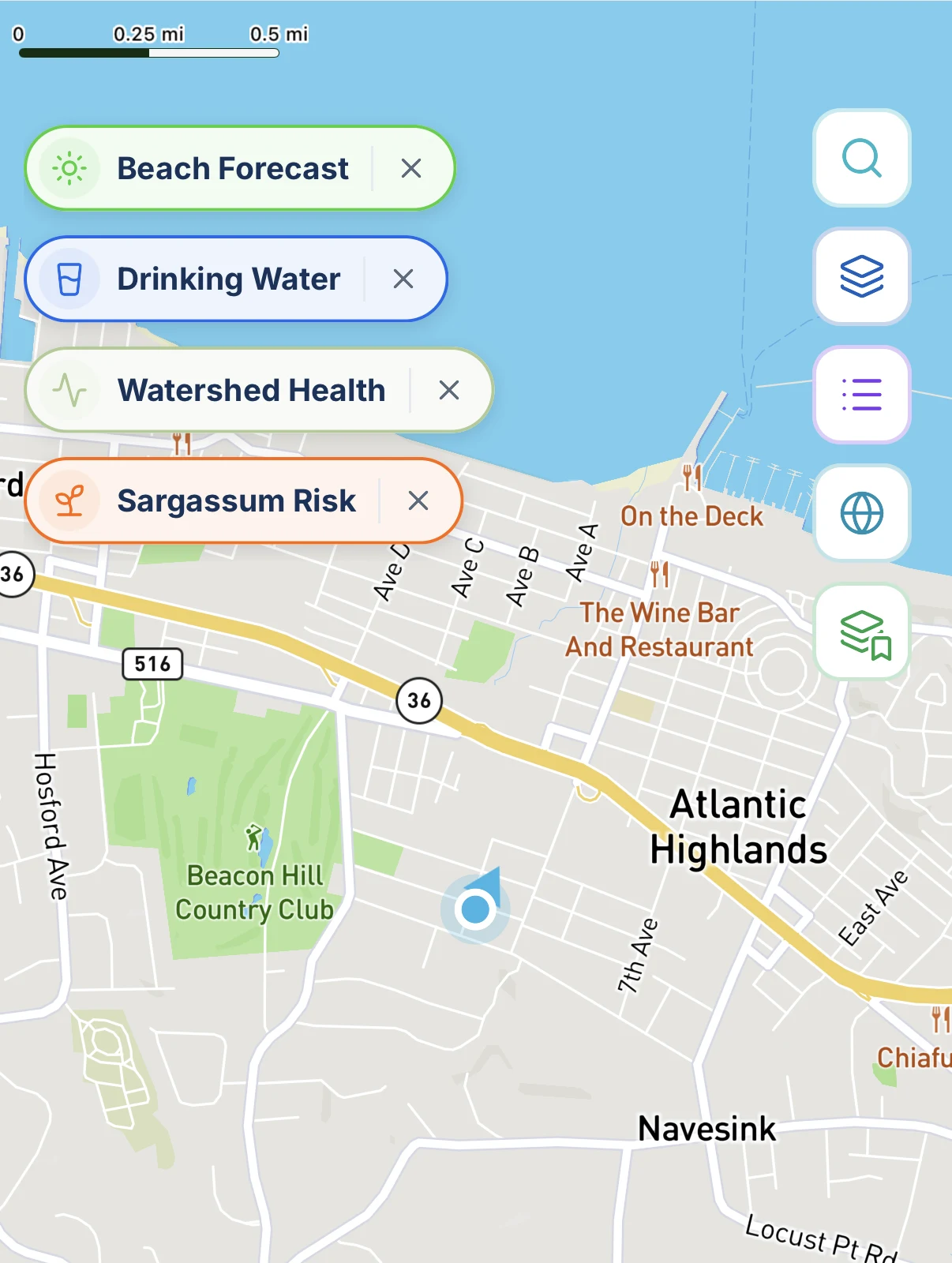
For illustration only. Examples shown do not represent live readings or alerts. Water conditions change, and the information you see will depend on your location, available sources, and when those sources were updated. Check dates and local guidance before making decisions about water use or safety.
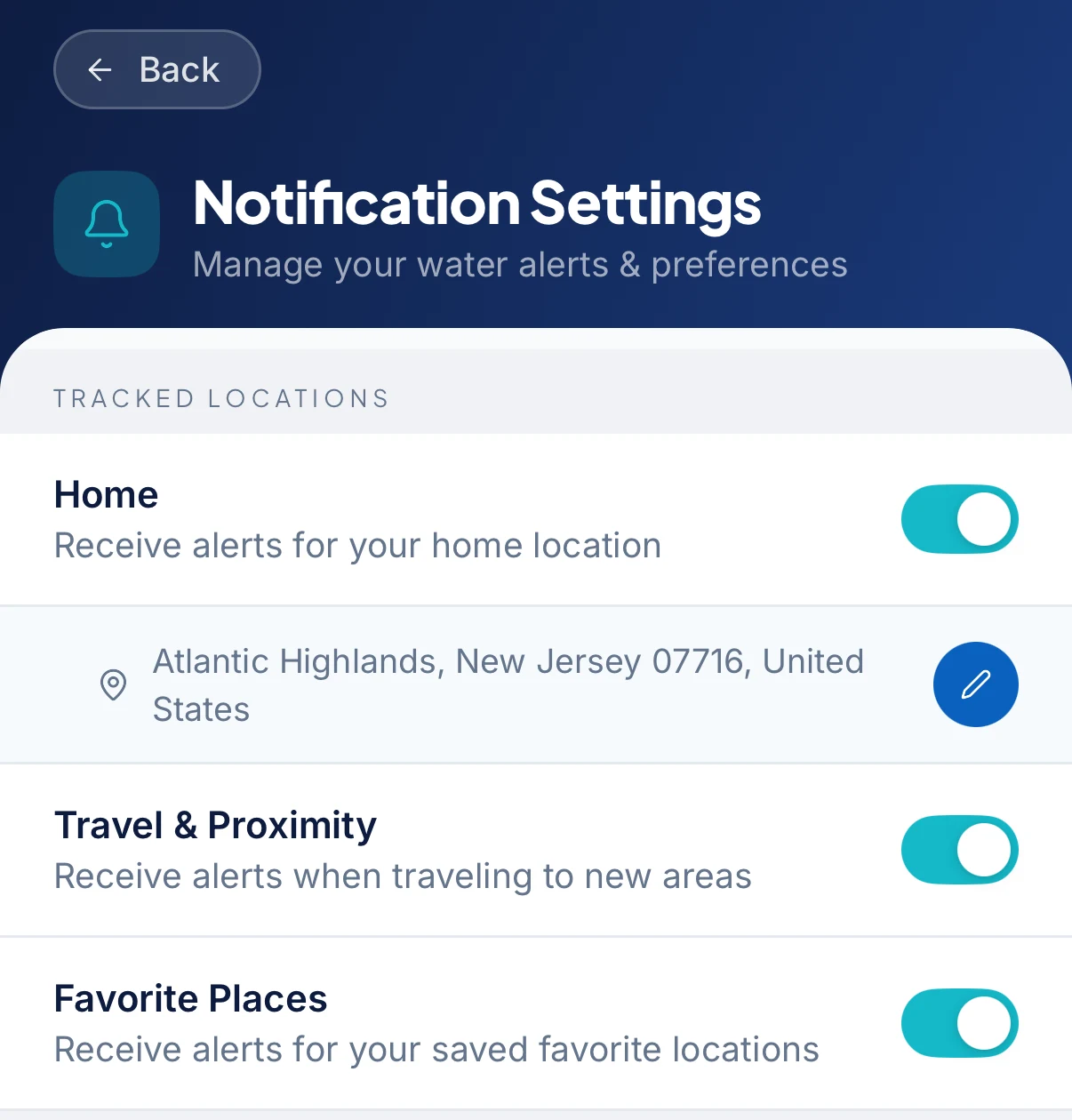
For illustration only. Examples shown do not represent live readings or alerts. Water conditions change, and the information you see will depend on your location, available sources, and when those sources were updated. Check dates and local guidance before making decisions about water use or safety.
Notification settings let you choose places and water topics that interest you, including home, travel, and favorite places. You can make those choices fit the way you use Water Savvy.
A change in your local water score. New information about a favorite swimming spot. A flood alert near your destination.
Water Savvy brings updates to your phone and email, helping you know when to take a closer look. See what’s changed, learn why it matters, and decide what it means for your day.
From everyday routines to weekend plans, stay connected to the waters you care about.
Your destination’s recreation water score is 92. Check the latest local conditions before you go.
Your local drinking water score rose 2 points to 95. See what changed and what it means.
Potential flooding near Highlands, NJ 07732. Check local updates before you travel.
For illustration only. Examples shown do not represent live readings or alerts. Water conditions change, and the information you see will depend on your location, available sources, and when those sources were updated. Check dates and local guidance before making decisions about water use or safety.
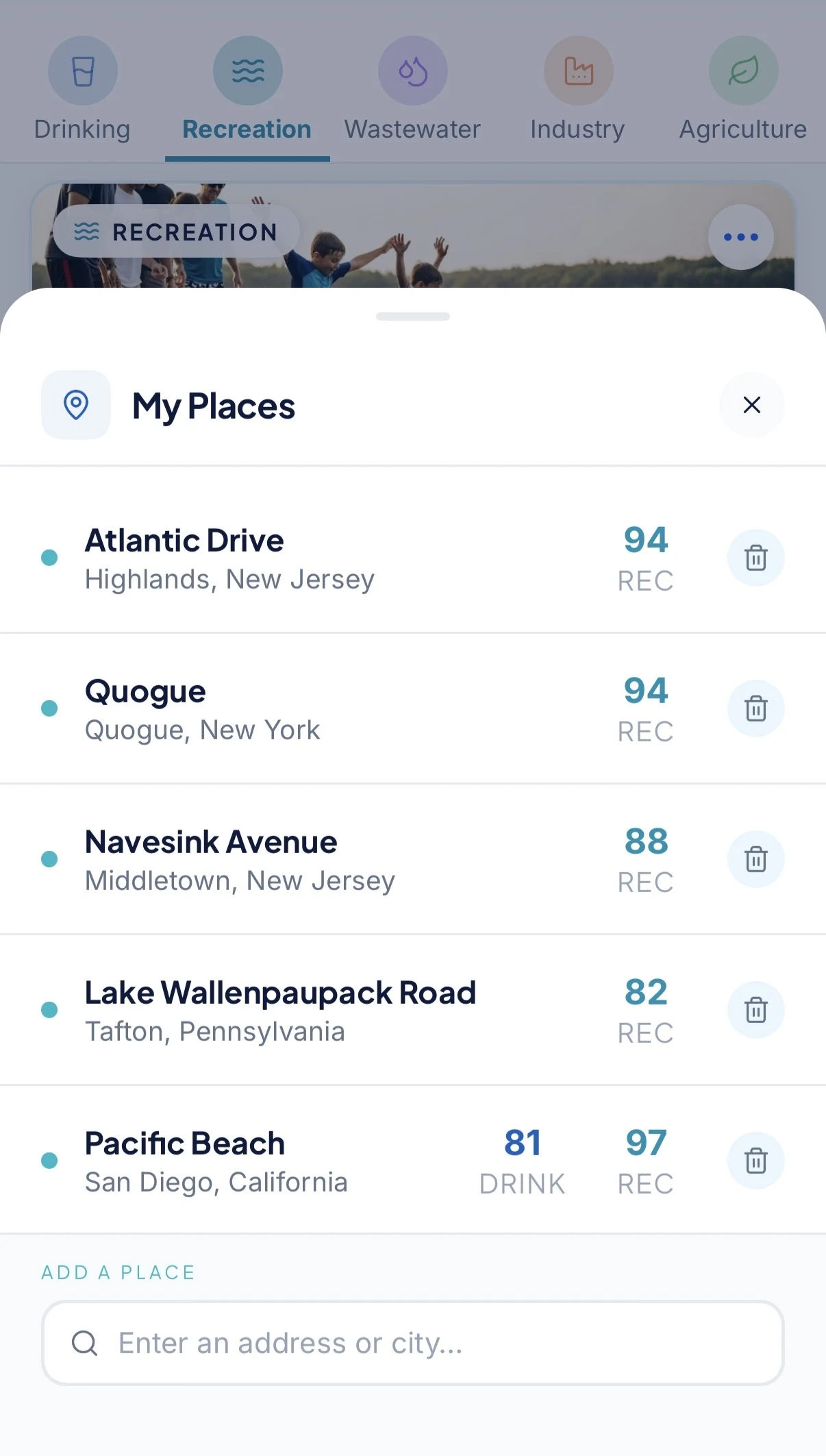
For illustration only. Examples shown do not represent live readings or alerts. Water conditions change, and the information you see will depend on your location, available sources, and when those sources were updated. Check dates and local guidance before making decisions about water use or safety.
Save places in My Places so you can find their water information again. When you want another view, explore photos shared by Water Spotters.
Meet Water SpottersMAKE KNOWING PART OF YOUR DAY
Check a place before you visit. Read about the water at home. Return when you have a new question or want to see whether new information is available.
Over time, the words, scores, and sources become easier to read. You have more to draw on when you make plans, ask a question, or talk about water in your community.
Explore your waters in the app. Get updates by email and through notifications on your phone. Text and WhatsApp updates are coming soon.
HELPFUL ANSWERS
A score helps explain the information available for a place and water type. It does not guarantee safety. Read the details and follow current notices from local officials and your water provider.
That depends on the source. Some reports describe tests collected over an earlier period. Check the testing dates and report dates rather than assuming every result describes today.
Missing information leaves a question unanswered. It should not be treated as proof that everything is fine. Look for the gap and check the relevant source when you need more detail.
Get Water Savvy and start exploring your waters. Take a quick look, follow your curiosity, and learn what to look for next.

 Water Savvy